You can read the full paper here: Download PDF (Self Driving Challenge Article Thimo Veldema.pdf)
Introduction
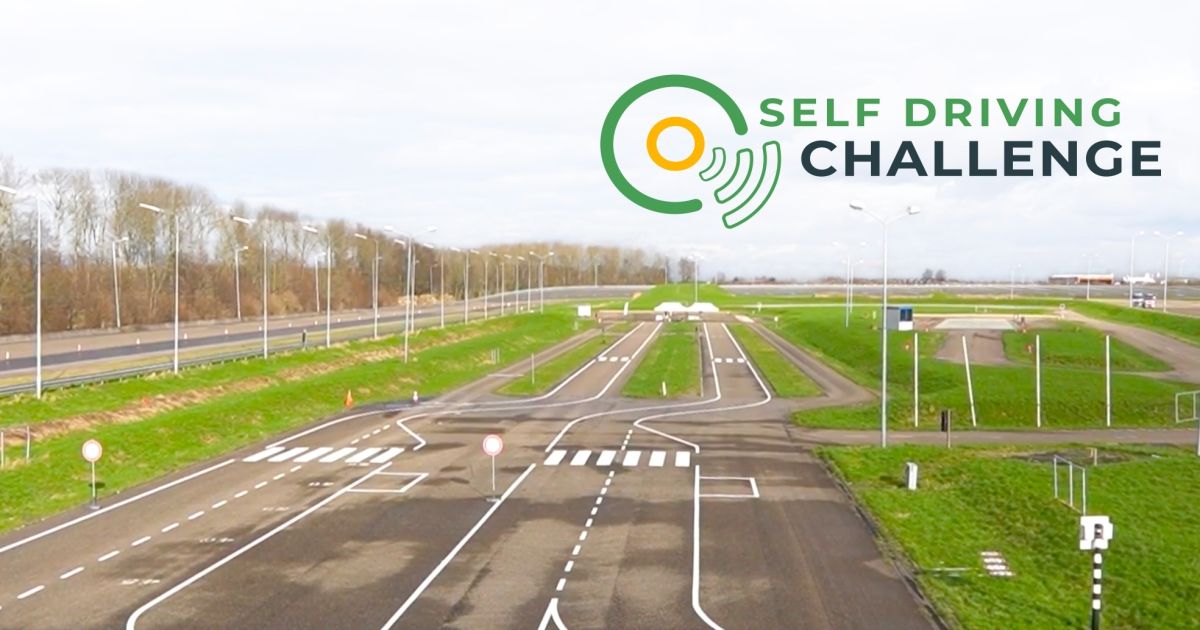
Developed and deployed a real-time monocular localization system for an autonomous vehicle navigating a closed test track for the annual Dutch RDW (Vehicle Authority) Self Driving Challenge. By utilizing only a single forward-facing camera, the system successfully estimated the vehicle’s position and orientation on the track. This was achieved by combining visual motion tracking (odometry) with real-time lane-line detection, constantly correcting the vehicle's path against a predefined map.
Challenges
- Hardware & Sensor Limitations: Traditional localization sensors like IMUs (Inertial Measurement Units) and wheel encoders were completely unavailable, meaning the vehicle had to navigate relying solely on video inputs.
- Accumulated Drift: Pure visual tracking (odometry) naturally accumulates tiny calculation errors over time, causing the vehicle's estimated position to drift significantly off-course.
- Severe Compute Constraints: The target vehicle's hardware had strictly limited processing power, requiring lightweight algorithms capable of running in real time.
Key Features
- Real-Time Bird's-Eye View (BEV): Transformed the forward-facing camera feed into a top-down perspective to accurately map and match road markings.
- Lightweight Lane Segmentation: Made an HSV color-filtering and Gaussian blur pipeline to isolate lane markings on the road.
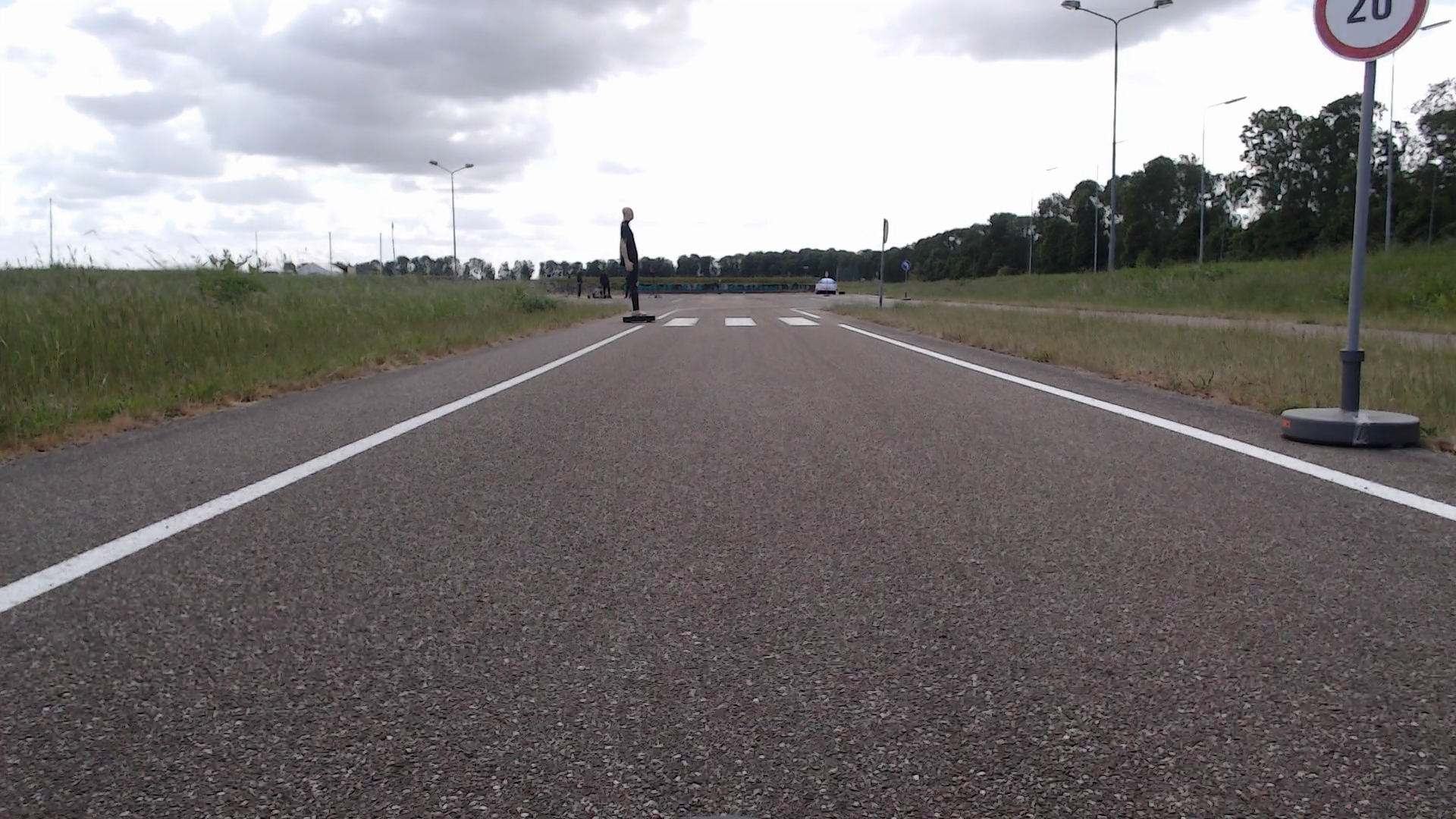

Figure 1: Raw camera input (left) and the resulting high-contrast binary lane mask (right).
- Robust Motion Tracking: Implemented a visual odometry pipeline using STAR keypoint detection and ORB descriptors to track relative vehicle movement between frames, using RANSAC to discard visual noise.
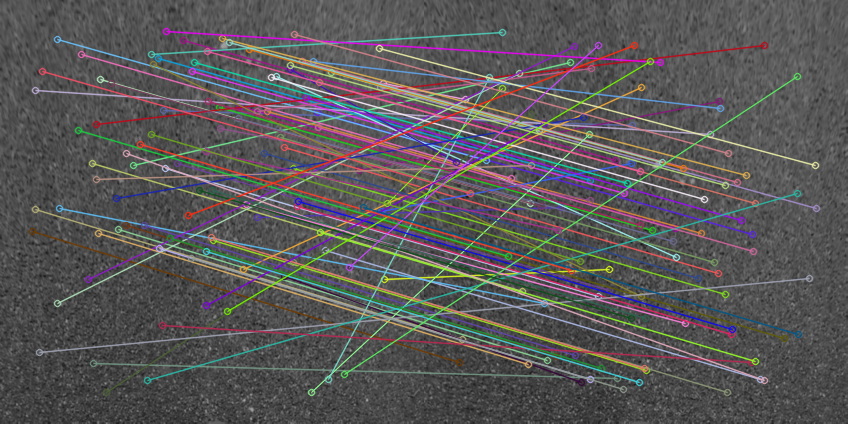
Figure 2: Micro-texture matches on the asphalt surface to estimate frame-to-frame translation.
- Probabilistic Localization (MCL): Developed a particle filter that compares detected lane lines against a reference map using downscaled HOG features ($128\times64$ pixels) for real-time matching.
- Sensor Fusion via Kalman Filter: Fused the smooth, short-term motion estimates from the odometry with the long-term corrective updates from the particle filter, resulting in stable and continuous positioning.

Figure 3: Map representation. The green arrow is the Kalman-filtered vehicle pose, surrounded by red particles representing the spatial probability distribution.
Results
- Alignment: Achieved a lateral (side-to-side) Mean Absolute Error (MAE) of 7 cm on straight road segments.
- Heading Accuracy: Maintained a rotational Mean Absolute Error of just 0.028 radians on straight stretches.
- Adaptive Drifting Recovery: Successfully navigated complex turns, pedestrian crossings, and stop lines. The system proved robust enough to automatically collapse "uncertain" position estimates the second a recognizable track feature came into view.
- Modular Architecture: Built the entire codebase to be modular, allowing the lane detector or odometry modules to be swapped out easily.